
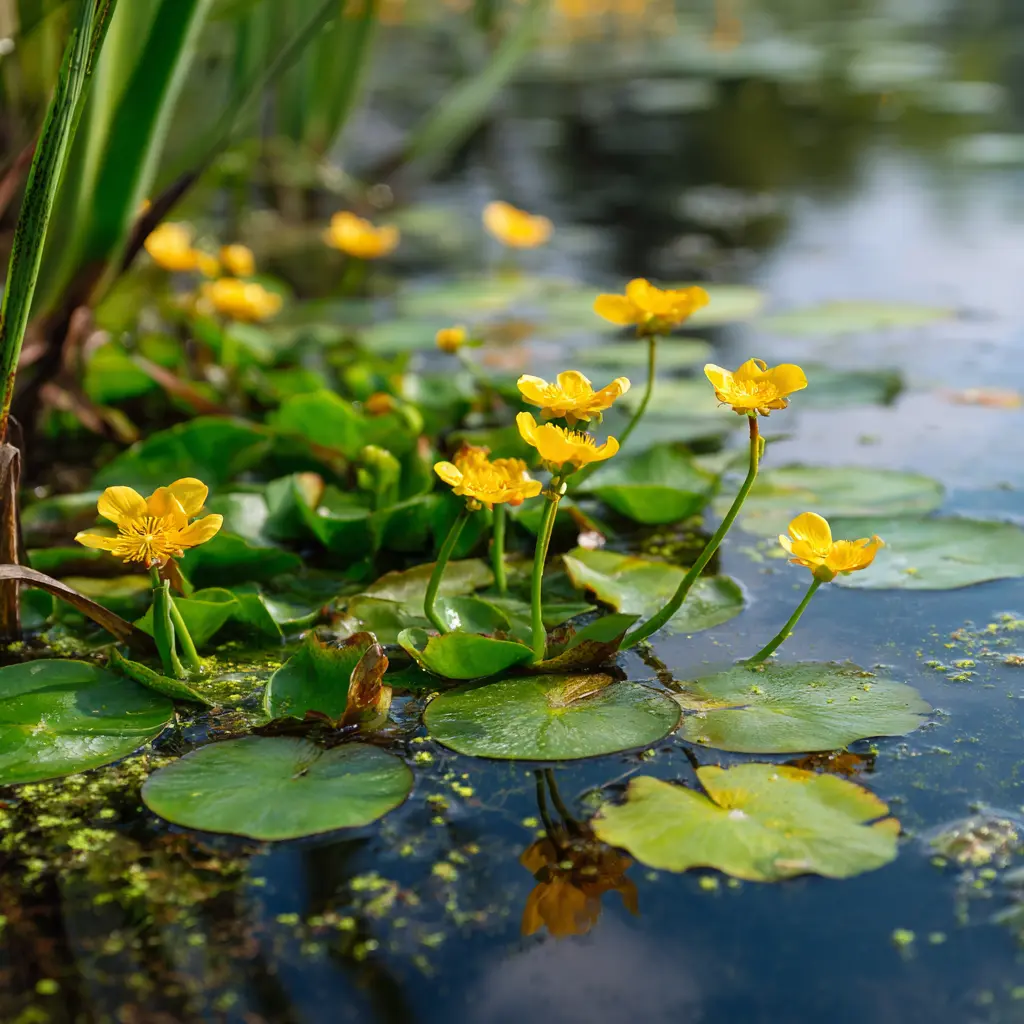
At Surrey Hills Conservation, we specialise in native pond planting schemes tailored to Surrey’s soil conditions, rainfall patterns, and seasonal temperature shifts.
Whether you are establishing a new wildlife pond or enhancing an existing feature, our planting approach prioritises biodiversity, resilience, and natural integration within the Surrey Hills landscape.
Visit us today to find out how we can help you with your pond.
David and the team will be happy to discuss your current project and how we can help you sustain your habitat-friendly pond.
Surrey Hills Conservation
Mad Horse Copse Farm
Logmore Lane,
Westcott
RH4 3GB
A carefully balanced mix of oxygenating, marginal, floating and deep-water plants is essential for water clarity, wildlife habitat and long-term ecological stability.
Aim for approximately 60 to 70 percent surface coverage at peak growth. Floating leaves and marginal planting help regulate temperature and suppress algae naturally.
These plants release oxygen into the water and compete directly with algae for nutrients, helping to maintain clarity and ecological balance.
| Plant Name | Key Benefits | Notes for Surrey Gardens |
|---|---|---|
| Hornwort (Ceratophyllum demersum) | Excellent oxygenator, free-floating, shelter for fry and invertebrates. | Thrives in still or slow-moving water, very hardy locally. |
| Spiked Water-milfoil (Myriophyllum spicatum) | Improves clarity, strong oxygenation, habitat support. | Can be vigorous in nutrient-rich water. |
| Water-starwort (Callitriche stagnalis) | Adaptable oxygenator, wildlife cover. | Suitable for shallow or deeper ponds. |
Marginals soften pond edges and create vital transition zones between water and surrounding landscape.
| Plant Name | Key Benefits | Notes for Surrey Gardens |
|---|---|---|
| Marsh Marigold (Caltha palustris) | Early nectar source, vibrant spring colour. | Ideal for clay soils and partial shade. |
| Water Forget-me-not (Myosotis scorpioides) | Natural edge softening, pollinator friendly. | Spreads gently in informal ponds. |
| Yellow Flag Iris (Iris pseudacorus) | Strong vertical interest, wildlife shelter. | Best planted in baskets to control spread. |
| Flowering Rush (Butomus umbellatus) | Architectural pink blooms. | Prefers sunny margins. |
Floating plants reduce light penetration, helping regulate temperature and limit algae growth.
| Plant Name | Key Benefits | Notes for Surrey Gardens |
|---|---|---|
| Fringed Water-lily (Nymphoides peltata) | Surface shade, yellow flowers. | Monitor spread in larger ponds. |
| Frogbit (Hydrocharis morsus-ranae) | Compact floating cover, wildlife refuge. | Excellent for small to medium ponds. |
Deep water plants provide substantial shading and anchor the visual structure of larger ponds.
| Plant Name | Key Benefits | Notes for Surrey Gardens |
|---|---|---|
| White Water-lily (Nymphaea alba) | Classic form, strong shade provision. | Requires deeper planting pockets. |